Cart
0
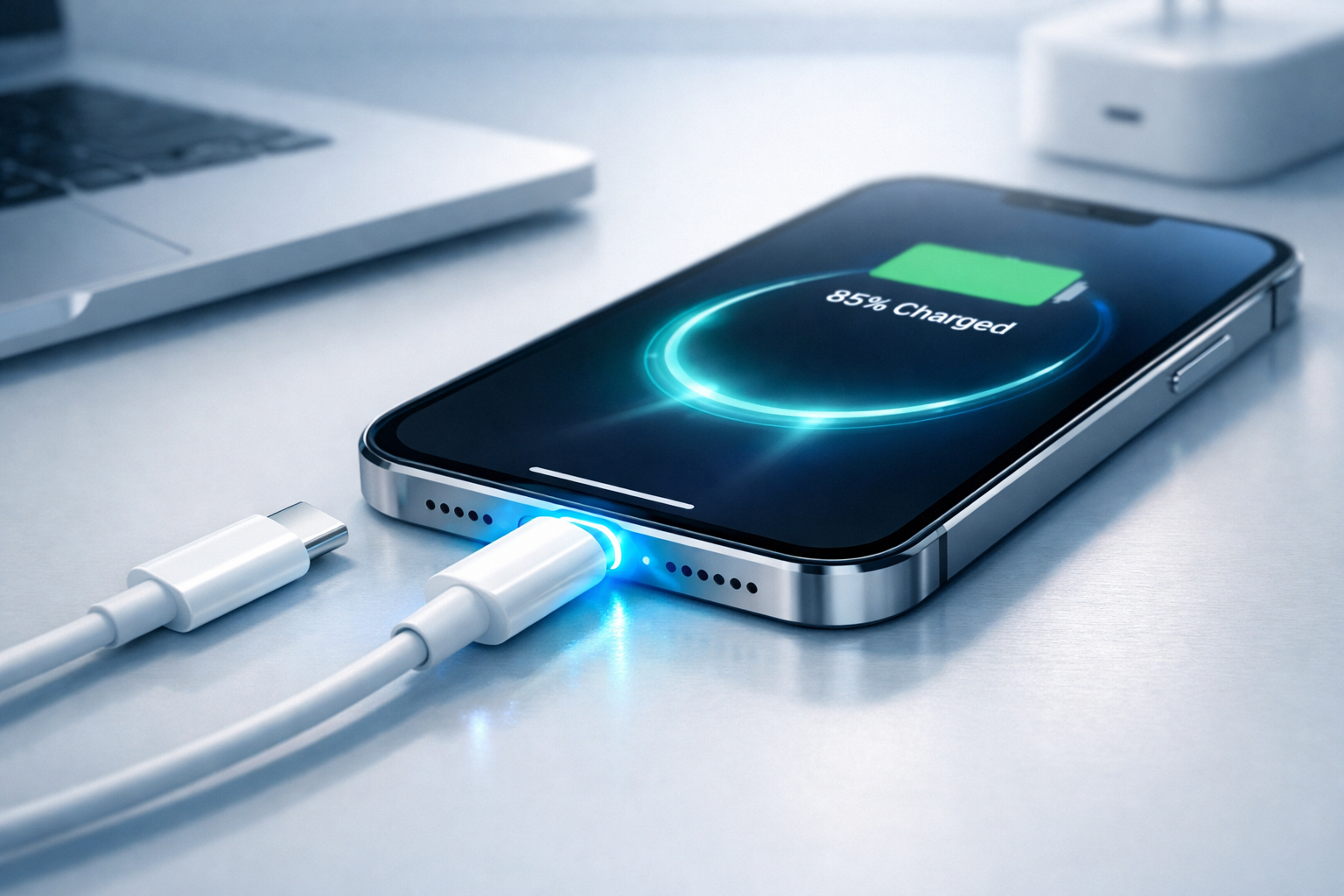
If you're still using an old USB-A to Lightning cable, 2026 is the perfect time to upgrade. With Apple’s ecosystem shifting toward USB-C and fast-charging becoming the norm, sticking with outdated cables can limit your device’s performance.
Here’s why switching to a USB-C to Lightning cable is a smart move today.
⚡ 1. Faster Charging Speeds
One of the biggest reasons to upgrade is speed.
USB-C supports Power Delivery (PD), which allows your iPhone to charge significantly faster than traditional USB-A connections. With the right adapter (20W or higher), you can charge your iPhone up to 50% in around 30 minutes. ()
In comparison, older Lightning setups are limited to lower wattage and slower charging speeds. ()
👉 Translation: Less time plugged in, more time using your phone.
📂 2. Faster Data Transfer
Need to transfer photos, videos, or backups?
USB-C offers much higher data transfer speeds than traditional Lightning connections. While older Lightning cables often operate at USB 2.0 speeds (~480 Mbps), USB-C can reach multi-gigabit speeds depending on the setup. ()
👉 That means quicker backups, faster file transfers, and less waiting.
🔌 3. Future-Proof Compatibility
The tech world has already made its decision: USB-C is the standard.
-
All modern iPhones (starting with iPhone 15) use USB-C
-
Apple has phased out Lightning in new devices
-
Global regulations now require USB-C for many electronics
()
Even if your current iPhone still uses Lightning, a USB-C to Lightning cable lets you stay compatible with newer chargers, laptops, and accessories.
👉 It’s a bridge between old and new tech.
🌍 4. One Cable for Multiple Devices
USB-C isn’t just for iPhones—it’s everywhere.
You can use the same USB-C charger for:
-
Android phones
-
Laptops (MacBook, Windows)
-
Tablets and accessories
-
Power banks and more
This reduces cable clutter and makes travel much easier.
👉 One cable, fewer headaches.
🔋 5. Better Power Delivery & Efficiency
USB-C cables can handle higher power output and smarter power management. ()
This means:
-
More efficient charging
-
Less heat generation
-
Better battery health over time
Even if the speed difference feels small day-to-day, the long-term benefits add up.
🛠️ 6. Improved Durability
USB-C cables are generally built to handle more wear and tear, with higher durability ratings compared to older Lightning designs. ()
👉 Fewer frayed cables. Less money wasted on replacements.
🚀 7. Apple Is Moving On (And You Should Too)
Apple has officially transitioned away from Lightning across its latest products. ()
That means:
-
Accessories are increasingly USB-C-based
-
Lightning cables will slowly become obsolete
-
Future devices won’t support older standards
👉 Upgrading now keeps you ahead instead of playing catch-up later.
✅ Final Thoughts
Upgrading to a USB-C to Lightning cable in 2026 isn’t just about convenience—it’s about unlocking your device’s full potential.
You get:
-
Faster charging
-
Faster data transfers
-
Better compatibility
-
A future-proof setup
If you’re still using an old cable, you’re not just behind—you’re missing out.